 fdc21f3eaf
Historically, serveContent has not set Content-Length when the user provides Content-Encoding. This causes broken responses when the user sets both Content-Length and Content-Encoding, and the request is a range request, because the returned data doesn't match the declared length. CL 381956 fixed this case by changing serveContent to always set a Content-Length header. Unfortunately, I've discovered multiple cases in the wild of users setting Content-Encoding: gzip and passing serveContent a ResponseWriter wrapper that gzips the data written to it. This breaks serveContent in a number of ways. In particular, there's no way for it to respond to Range requests properly, because it doesn't know the recipient's view of the content. What the user should be doing in this case is just using io.Copy to send the gzipped data to the response. Or possibly setting Transfer-Encoding: gzip. But whatever they should be doing, what they are doing has mostly worked for non-Range requests, and setting Content-Length makes it stop working because the length of the file being served doesn't match the number of bytes being sent. So in the interests of not breaking users (even if they're misusing serveContent in ways that are already broken), partially revert CL 381956. For non-Range requests, don't set Content-Length when the user has set Content-Encoding. This matches our previous behavior and causes minimal harm in cases where we could have set Content-Length. (We will send using chunked encoding rather than identity, but that's fine.) For Range requests, set Content-Length unconditionally. Either the user isn't mangling the data in the ResponseWriter, in which case the length is correct, or they are, in which case the response isn't going to contain the right bytes anyway. (Note that a Range request for a Content-Length: gzip file is requesting a range of *gzipped* bytes, not a range from the uncompressed file.) Change-Id: I5e788e6756f34cee520aa7c456826f462a59f7eb Reviewed-on: https://go-review.googlesource.com/c/go/+/542595 Auto-Submit: Damien Neil <dneil@google.com> LUCI-TryBot-Result: Go LUCI <golang-scoped@luci-project-accounts.iam.gserviceaccount.com> Reviewed-by: Jonathan Amsterdam <jba@google.com> |
||
|---|---|---|
| .github | ||
| api | ||
| doc | ||
| lib/time | ||
| misc | ||
| src | ||
| test | ||
| .gitattributes | ||
| .gitignore | ||
| CONTRIBUTING.md | ||
| LICENSE | ||
| PATENTS | ||
| README.md | ||
| SECURITY.md | ||
| codereview.cfg | ||
| go.env | ||
README.md
The Go Programming Language
Go is an open source programming language that makes it easy to build simple, reliable, and efficient software.
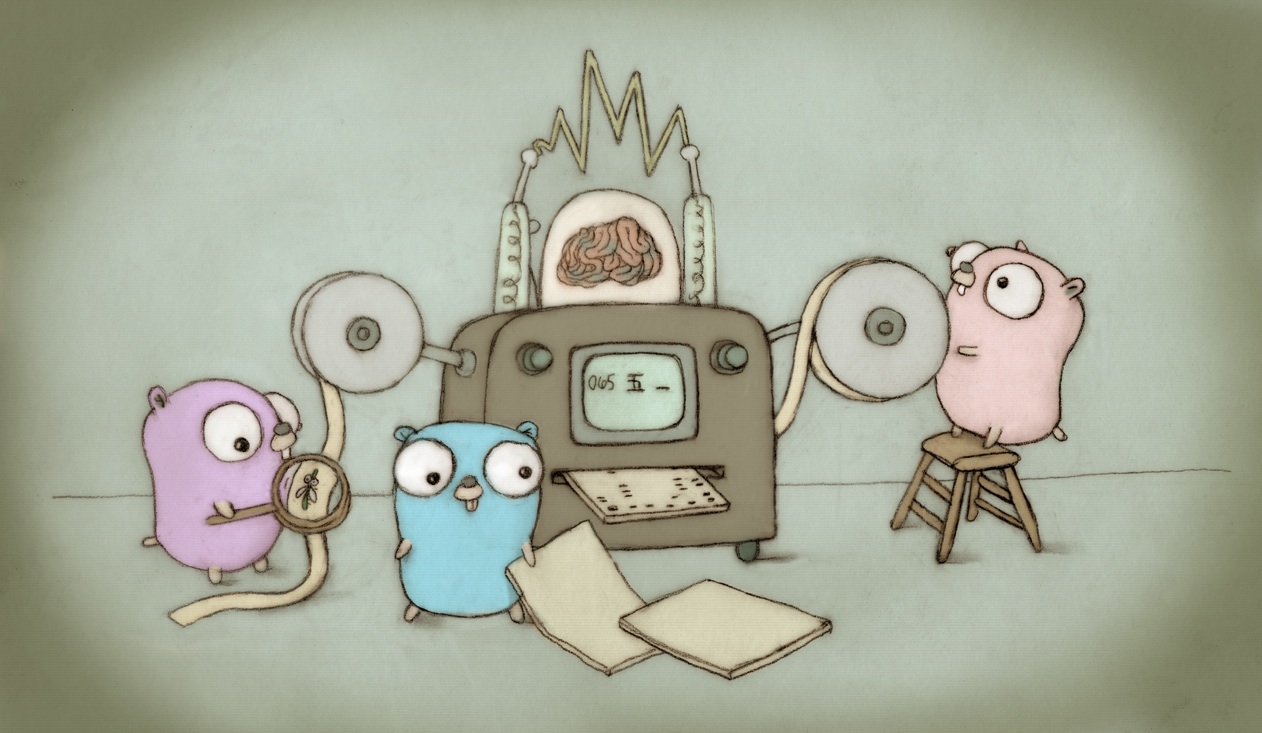 Gopher image by Renee French, licensed under Creative Commons 4.0 Attributions license.
Our canonical Git repository is located at https://go.googlesource.com/go. There is a mirror of the repository at https://github.com/golang/go.
Unless otherwise noted, the Go source files are distributed under the BSD-style license found in the LICENSE file.
Download and Install
Binary Distributions
Official binary distributions are available at https://go.dev/dl/.
After downloading a binary release, visit https://go.dev/doc/install for installation instructions.
Install From Source
If a binary distribution is not available for your combination of operating system and architecture, visit https://go.dev/doc/install/source for source installation instructions.
Contributing
Go is the work of thousands of contributors. We appreciate your help!
To contribute, please read the contribution guidelines at https://go.dev/doc/contribute.
Note that the Go project uses the issue tracker for bug reports and proposals only. See https://go.dev/wiki/Questions for a list of places to ask questions about the Go language.