 e6b76bfc46
While investigating #60083, I found a couple of bugs (notably #61034) that had slipped through code review in part because the concurrency patterns used in the testing package were too complex for me to fully reason about. This change adjusts those patterns to be more in line with current idioms, and to reduce the number of special cases that depend on details that should be orthogonal. (For example: the details of how we invoke the Cleanup functions should not depend on whether the test happened to run any parallel subtests.) In the process, this change fixes a handful of bugs: - Concurrent calls to Run (explicitly allowed by TestParallelSub) could previously drive the testcontext.running count negative, causing the number of running parallel tests to exceed the -parallel flag. - The -failfast flag now takes effect immediately on failure. It no longer delays until the test finishes, and no longer misses failures during cleanup (fixing #61034). - If a Cleanup function calls runtime.Goexit (typically via t.FailNow) during a panic, Cleanup functions from its parent tests are no longer skipped and buffered logs from its parent tests are now flushed. - The time reported for a test with subtests now includes the time spent running those subtests, regardless of whether they are parallel. (Previously, non-parallel subtests were included but parallel subtests were not.) - Calls to (*B).Run in iterations after the first are now diagnosed with a panic. (This diagnoses badly-behaved benchmarks: if Run is called during the first iteration, no subsequent iterations are supposed to occur.) Fixes #61034. Change-Id: I3797f6ef5210a3d2d5d6c2710d3f35c0219b02ea Cq-Include-Trybots: luci.golang.try:gotip-linux-amd64-longtest,gotip-linux-amd64-longtest-race,gotip-windows-amd64-longtest Reviewed-on: https://go-review.googlesource.com/c/go/+/506755 Auto-Submit: Bryan Mills <bcmills@google.com> Reviewed-by: Alan Donovan <adonovan@google.com> LUCI-TryBot-Result: Go LUCI <golang-scoped@luci-project-accounts.iam.gserviceaccount.com> |
||
|---|---|---|
| .github | ||
| api | ||
| doc | ||
| lib/time | ||
| misc | ||
| src | ||
| test | ||
| .gitattributes | ||
| .gitignore | ||
| CONTRIBUTING.md | ||
| LICENSE | ||
| PATENTS | ||
| README.md | ||
| SECURITY.md | ||
| codereview.cfg | ||
| go.env | ||
README.md
The Go Programming Language
Go is an open source programming language that makes it easy to build simple, reliable, and efficient software.
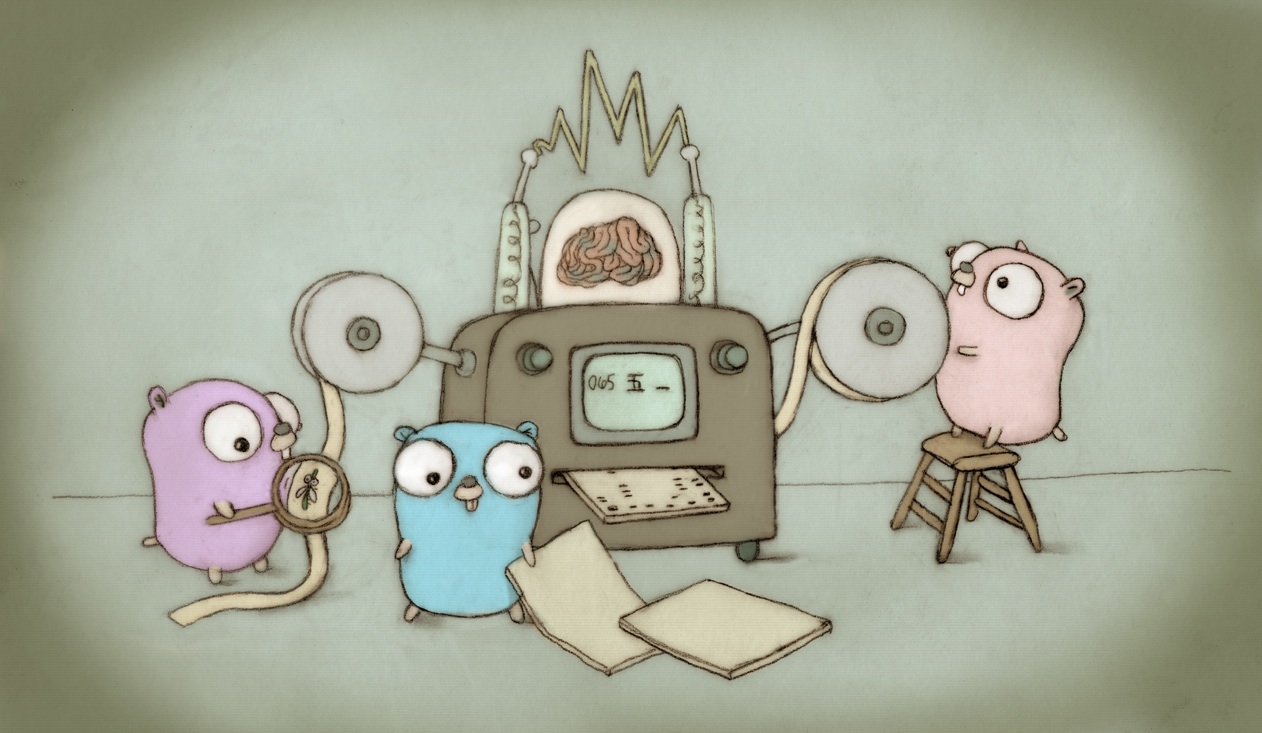 Gopher image by Renee French, licensed under Creative Commons 4.0 Attributions license.
Our canonical Git repository is located at https://go.googlesource.com/go. There is a mirror of the repository at https://github.com/golang/go.
Unless otherwise noted, the Go source files are distributed under the BSD-style license found in the LICENSE file.
Download and Install
Binary Distributions
Official binary distributions are available at https://go.dev/dl/.
After downloading a binary release, visit https://go.dev/doc/install for installation instructions.
Install From Source
If a binary distribution is not available for your combination of operating system and architecture, visit https://go.dev/doc/install/source for source installation instructions.
Contributing
Go is the work of thousands of contributors. We appreciate your help!
To contribute, please read the contribution guidelines at https://go.dev/doc/contribute.
Note that the Go project uses the issue tracker for bug reports and proposals only. See https://go.dev/wiki/Questions for a list of places to ask questions about the Go language.