 c856fbf361
go.dev/cl/339591 changed the code generation to use a constant string,
so that the ~88KiB table can be marked read-only.

The compiled code became a lot better, but unfortunately,
the generated Go source became significantly more inefficient.
The numbers below compare "gofmt -l" and "go tool compile" of said file,
where "old" is the file as of Go 1.17, and "new" as of master in 2022/01/19:

	name           old time/op         new time/op         delta
	Gofmt                 22.8ms ± 6%        898.5ms ± 3%  +3837.32%  (p=0.000 n=8+8)
	GoToolCompile         26.9ms ± 2%        371.1ms ± 2%  +1278.36%  (p=0.000 n=7+8)

	name           old user-time/op    new user-time/op    delta
	Gofmt                 25.7ms ±65%        897.1ms ± 3%  +3383.86%  (p=0.000 n=8+8)
	GoToolCompile         35.1ms ±26%        367.2ms ± 3%   +945.80%  (p=0.000 n=8+8)

	name           old sys-time/op     new sys-time/op     delta
	Gofmt                6.42ms ±276%         7.23ms ±38%       ~     (p=0.412 n=8+6)
	GoToolCompile        9.20ms ±100%        13.90ms ±53%       ~     (p=0.105 n=8+8)

	name           old peak-RSS-bytes  new peak-RSS-bytes  delta
	Gofmt                 9.11MB ± 7%        22.79MB ± 1%   +150.23%  (p=0.000 n=8+8)
	GoToolCompile         25.1MB ± 2%         68.6MB ± 2%   +173.57%  (p=0.000 n=8+8)

"+" operators are binary expressions at the syntax tree level,
which are represented by packages like go/ast as roughly:

	struct {
		X  Expr
		Op Token
		Y  Expr
	}

Since each node is a pointer, chains of "+" operators act like linked lists.
The generated code has about 14k lines, and 8 "+" operators per line,
meaning that we end up with a linked list with over 11k elements.

This explains the slow-down in gofmt; the printer must walk said list,
and it does so more than once to work out how to format it.
It seems like the compiler is similarly affected by the huge length.

To remedy the effect of the linked list, use go:embed instead.
This results in the same string variable with the binary table,
but it greatly reduces the amount of syntax and its cost above.
We still keep the generator around, but modified so it produces the
binary file to be embedded rather than a large Go file.

Finally, we update go/build/deps_test.go to allow crypto/elliptic to
depend on embed; it's a tiny package and crypto/elliptic was already
manually embedding assets via code generation.
The change to deps_test.go was briefly discussed in the issue below.

Fixes #50995.

Change-Id: I0c8b432710e971a296a2e9c99147cc2cad9662aa
Reviewed-on: https://go-review.googlesource.com/c/go/+/380475
Run-TryBot: Daniel Martí <mvdan@mvdan.cc>
Trust: Daniel Martí <mvdan@mvdan.cc>
Trust: Josh Bleecher Snyder <josharian@gmail.com>
TryBot-Result: Gopher Robot <gobot@golang.org>
Reviewed-by: Filippo Valsorda <filippo@golang.org>
|
||
|---|---|---|
| .github | ||
| api | ||
| doc | ||
| lib/time | ||
| misc | ||
| src | ||
| test | ||
| .gitattributes | ||
| .gitignore | ||
| AUTHORS | ||
| CONTRIBUTING.md | ||
| CONTRIBUTORS | ||
| LICENSE | ||
| PATENTS | ||
| README.md | ||
| SECURITY.md | ||
| codereview.cfg | ||
README.md
The Go Programming Language
Go is an open source programming language that makes it easy to build simple, reliable, and efficient software.
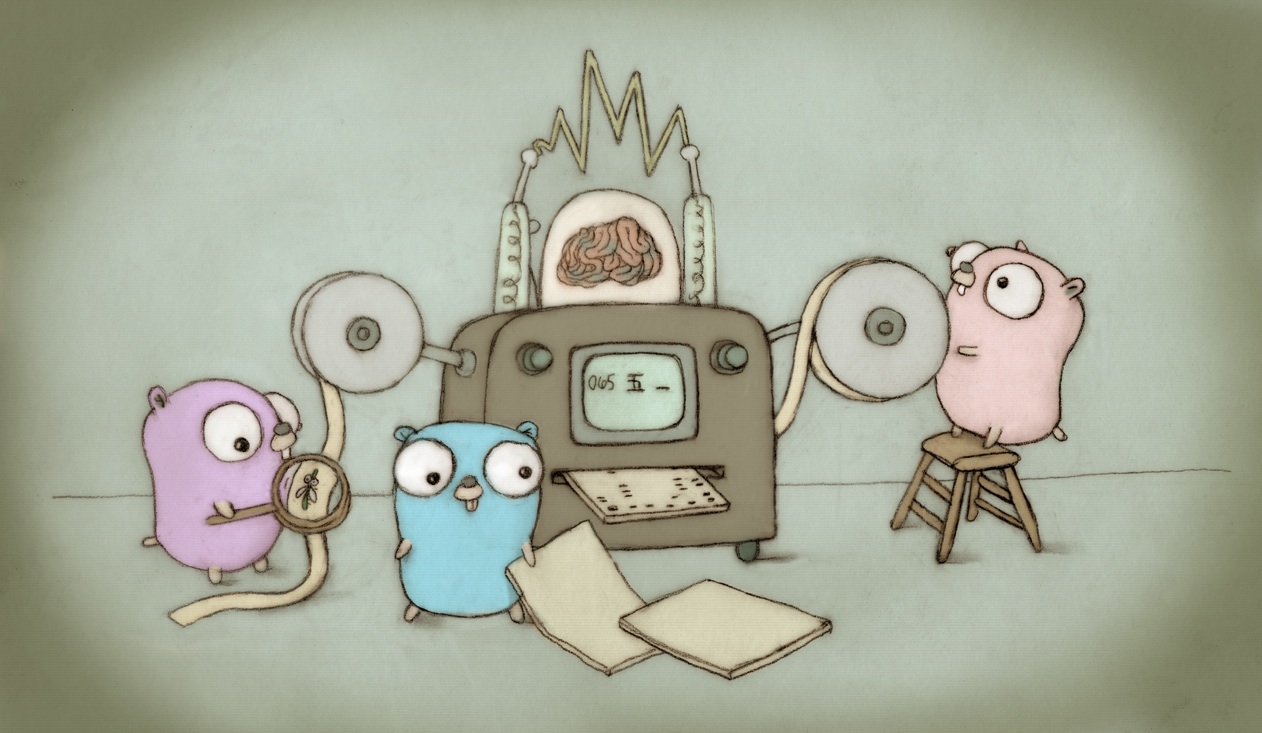 Gopher image by Renee French, licensed under Creative Commons 3.0 Attributions license.
Our canonical Git repository is located at https://go.googlesource.com/go. There is a mirror of the repository at https://github.com/golang/go.
Unless otherwise noted, the Go source files are distributed under the BSD-style license found in the LICENSE file.
Download and Install
Binary Distributions
Official binary distributions are available at https://golang.org/dl/.
After downloading a binary release, visit https://golang.org/doc/install for installation instructions.
Install From Source
If a binary distribution is not available for your combination of operating system and architecture, visit https://golang.org/doc/install/source for source installation instructions.
Contributing
Go is the work of thousands of contributors. We appreciate your help!
To contribute, please read the contribution guidelines at https://golang.org/doc/contribute.
Note that the Go project uses the issue tracker for bug reports and proposals only. See https://golang.org/wiki/Questions for a list of places to ask questions about the Go language.