 49eba8b15b
Currently one of the reasons experimental events are tricky to use is because: - There's no way to take advantage of the existing infrastructure, like strings and stacks, and - There's no way to attach arbitrary data to an event (except through strings, possibly). Fix this by abstracting away the raw arguments in an ExperimentalEvent and requiring access to the arguments via a new method, ArgValue. This returns a Value, which gives us an opportunity to construct a typed value for the raw argument dynamically, and a way to access existing tables. The type of the argument is deduced from conventions for the argument's name. This seems more than sufficient for experimental events. To make this work, we also need to add a "string" variant to the Value type. This may be a little confusing since they're primarily used for metrics, but one could imagine other scenarios in which this is useful, such as including build information in the trace as a metric, so I think this is fine. This change also updates the Value API to accomodate a String method for use with things that expect a fmt.Stringer, which means renaming the value assertion methods to have a "To" prefix. Change-Id: I43a2334f6cd306122c5b94641a6252ca4258b39f Reviewed-on: https://go-review.googlesource.com/c/go/+/645135 Reviewed-by: Michael Pratt <mpratt@google.com> LUCI-TryBot-Result: Go LUCI <golang-scoped@luci-project-accounts.iam.gserviceaccount.com> Auto-Submit: Michael Knyszek <mknyszek@google.com> |
||
|---|---|---|
| .github | ||
| api | ||
| doc | ||
| lib | ||
| misc | ||
| src | ||
| test | ||
| .gitattributes | ||
| .gitignore | ||
| CONTRIBUTING.md | ||
| LICENSE | ||
| PATENTS | ||
| README.md | ||
| SECURITY.md | ||
| codereview.cfg | ||
| go.env | ||
README.md
The Go Programming Language
Go is an open source programming language that makes it easy to build simple, reliable, and efficient software.
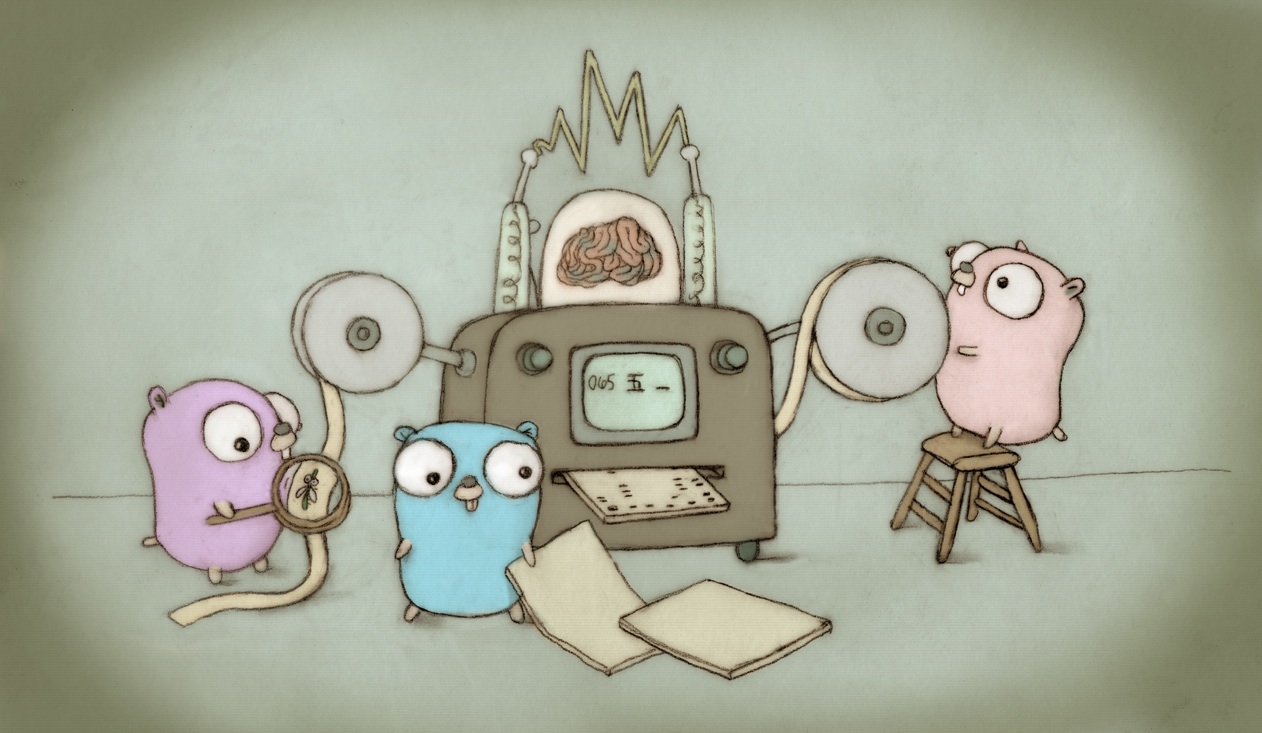 Gopher image by Renee French, licensed under Creative Commons 4.0 Attribution license.
Our canonical Git repository is located at https://go.googlesource.com/go. There is a mirror of the repository at https://github.com/golang/go.
Unless otherwise noted, the Go source files are distributed under the BSD-style license found in the LICENSE file.
Download and Install
Binary Distributions
Official binary distributions are available at https://go.dev/dl/.
After downloading a binary release, visit https://go.dev/doc/install for installation instructions.
Install From Source
If a binary distribution is not available for your combination of operating system and architecture, visit https://go.dev/doc/install/source for source installation instructions.
Contributing
Go is the work of thousands of contributors. We appreciate your help!
To contribute, please read the contribution guidelines at https://go.dev/doc/contribute.
Note that the Go project uses the issue tracker for bug reports and proposals only. See https://go.dev/wiki/Questions for a list of places to ask questions about the Go language.