 251daf46fb
Some C APIs require the use or structures that contain pointers to buffers (iovec, io_uring, ...). The pointer passing rules would require that these buffers are allocated in C memory and to process this data with Go libraries it would need to be copied. In order to provide a zero-copy way to use these C APIs, this CL implements a Pinner API that allows to pin Go objects, which guarantees that the garbage collector does not move these objects while pinned. This allows to relax the pointer passing rules so that pinned pointers can be stored in C allocated memory or can be contained in Go memory that is passed to C functions. The Pin() method accepts pointers to objects of any type and unsafe.Pointer. Slices and arrays can be pinned by calling Pin() with the pointer to the first element. Pinning of maps is not supported. If the GC collects unreachable Pinner holding pinned objects it panics. If Pin() is called with the other non-pointer types it panics as well. Performance considerations: This change has no impact on execution time on existing code, because checks are only done in code paths, that would panic otherwise. The memory footprint on existing code is one pointer per memory span. Fixes: #46787 Signed-off-by: Sven Anderson <sven@anderson.de> Change-Id: I110031fe789b92277ae45a9455624687bd1c54f2 Reviewed-on: https://go-review.googlesource.com/c/go/+/367296 Auto-Submit: Michael Knyszek <mknyszek@google.com> TryBot-Result: Gopher Robot <gobot@golang.org> Reviewed-by: Michael Knyszek <mknyszek@google.com> Reviewed-by: Than McIntosh <thanm@google.com> Run-TryBot: Michael Knyszek <mknyszek@google.com> |
||
|---|---|---|
| .github | ||
| api | ||
| doc | ||
| lib/time | ||
| misc | ||
| src | ||
| test | ||
| .gitattributes | ||
| .gitignore | ||
| CONTRIBUTING.md | ||
| LICENSE | ||
| PATENTS | ||
| README.md | ||
| SECURITY.md | ||
| codereview.cfg | ||
| go.env | ||
README.md
The Go Programming Language
Go is an open source programming language that makes it easy to build simple, reliable, and efficient software.
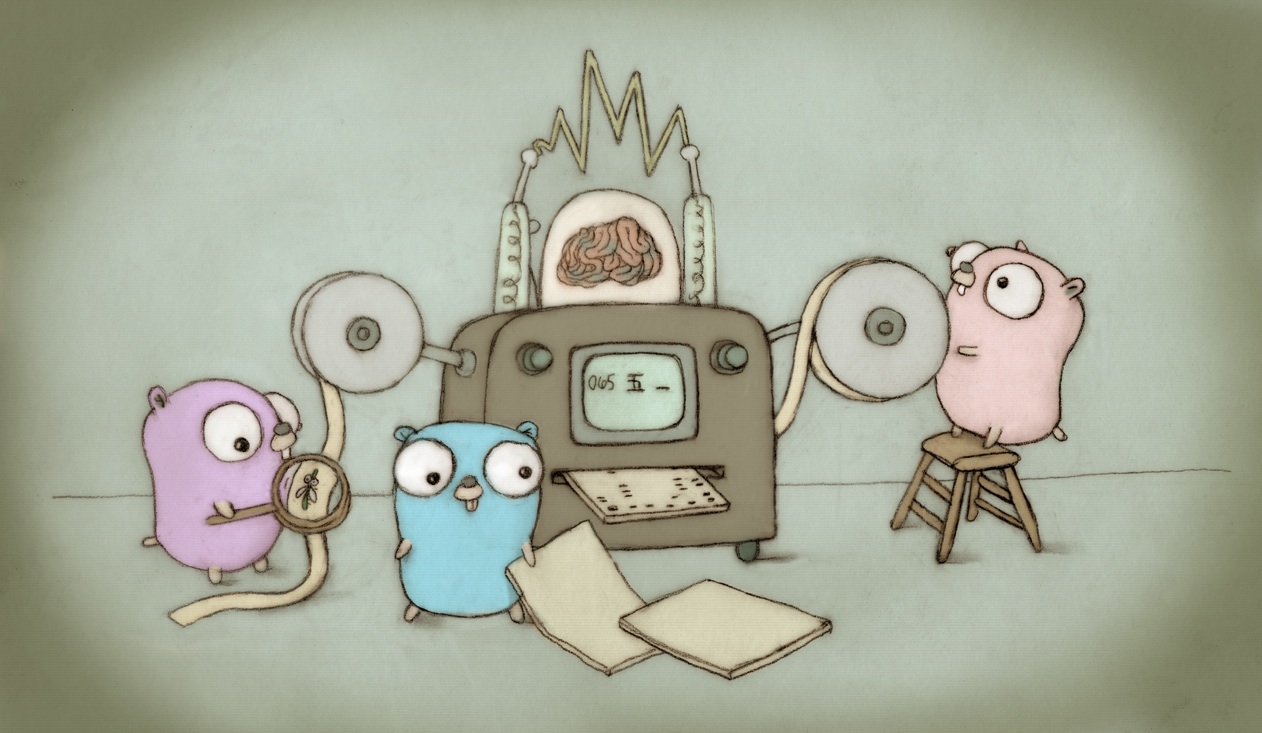 Gopher image by Renee French, licensed under Creative Commons 4.0 Attributions license.
Our canonical Git repository is located at https://go.googlesource.com/go. There is a mirror of the repository at https://github.com/golang/go.
Unless otherwise noted, the Go source files are distributed under the BSD-style license found in the LICENSE file.
Download and Install
Binary Distributions
Official binary distributions are available at https://go.dev/dl/.
After downloading a binary release, visit https://go.dev/doc/install for installation instructions.
Install From Source
If a binary distribution is not available for your combination of operating system and architecture, visit https://go.dev/doc/install/source for source installation instructions.
Contributing
Go is the work of thousands of contributors. We appreciate your help!
To contribute, please read the contribution guidelines at https://go.dev/doc/contribute.
Note that the Go project uses the issue tracker for bug reports and proposals only. See https://go.dev/wiki/Questions for a list of places to ask questions about the Go language.