 1c00354013
The pprof mutex profile was meant to match the Google C++ (now Abseil) mutex profiler, originally designed and implemented by Mike Burrows. When we worked on the Go version, pjw and I missed that C++ counts the time each thread is blocked, even if multiple threads are blocked on a mutex. That is, if 100 threads are blocked on the same mutex for the same 10ms, that still counts as 1000ms of contention in C++. In Go, to date, /debug/pprof/mutex has counted that as only 10ms of contention. If 100 goroutines are blocked on one mutex and only 1 goroutine is blocked on another mutex, we probably do want to see the first mutex as being more contended, so the Abseil approach is the more useful one. This CL adopts "contention scales with number of goroutines blocked", to better match Abseil [1]. However, it still makes sure to attribute the time to the unlock that caused the backup, not subsequent innocent unlocks that were affected by the congestion. In this way it still gives more accurate profiles than Abseil does. [1] https://github.com/abseil/abseil-cpp/blob/lts_2023_01_25/absl/synchronization/mutex.cc#L2390 Fixes #61015. Change-Id: I7eb9e706867ffa8c0abb5b26a1b448f6eba49331 Reviewed-on: https://go-review.googlesource.com/c/go/+/506415 Run-TryBot: Russ Cox <rsc@golang.org> Auto-Submit: Russ Cox <rsc@golang.org> TryBot-Result: Gopher Robot <gobot@golang.org> Reviewed-by: Michael Knyszek <mknyszek@google.com> |
||
|---|---|---|
| .github | ||
| api | ||
| doc | ||
| lib/time | ||
| misc | ||
| src | ||
| test | ||
| .gitattributes | ||
| .gitignore | ||
| CONTRIBUTING.md | ||
| LICENSE | ||
| PATENTS | ||
| README.md | ||
| SECURITY.md | ||
| codereview.cfg | ||
| go.env | ||
README.md
The Go Programming Language
Go is an open source programming language that makes it easy to build simple, reliable, and efficient software.
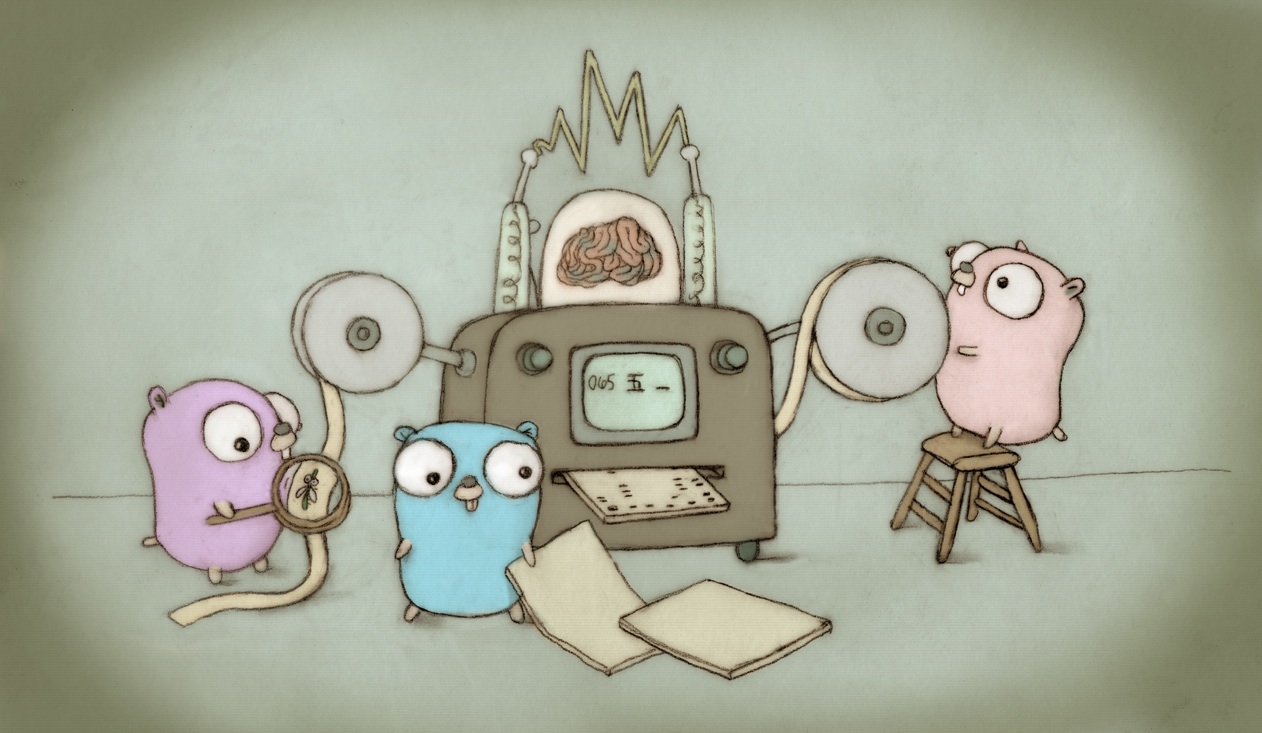 Gopher image by Renee French, licensed under Creative Commons 4.0 Attributions license.
Our canonical Git repository is located at https://go.googlesource.com/go. There is a mirror of the repository at https://github.com/golang/go.
Unless otherwise noted, the Go source files are distributed under the BSD-style license found in the LICENSE file.
Download and Install
Binary Distributions
Official binary distributions are available at https://go.dev/dl/.
After downloading a binary release, visit https://go.dev/doc/install for installation instructions.
Install From Source
If a binary distribution is not available for your combination of operating system and architecture, visit https://go.dev/doc/install/source for source installation instructions.
Contributing
Go is the work of thousands of contributors. We appreciate your help!
To contribute, please read the contribution guidelines at https://go.dev/doc/contribute.
Note that the Go project uses the issue tracker for bug reports and proposals only. See https://go.dev/wiki/Questions for a list of places to ask questions about the Go language.